In the early days of quantum theory, when the world was still reeling from the revolutionary implications of Schrödinger’s wave equation and Heisenberg’s uncertainty principle, an often-forgotten Canadian physicist made one of the first experimental validations of wave mechanics. Her name was Mary Laura Chalk Rowles—a trailblazer whose brilliant mind, quiet persistence, and enduring curiosity left an imprint on quantum physics, even as her name faded from textbooks.
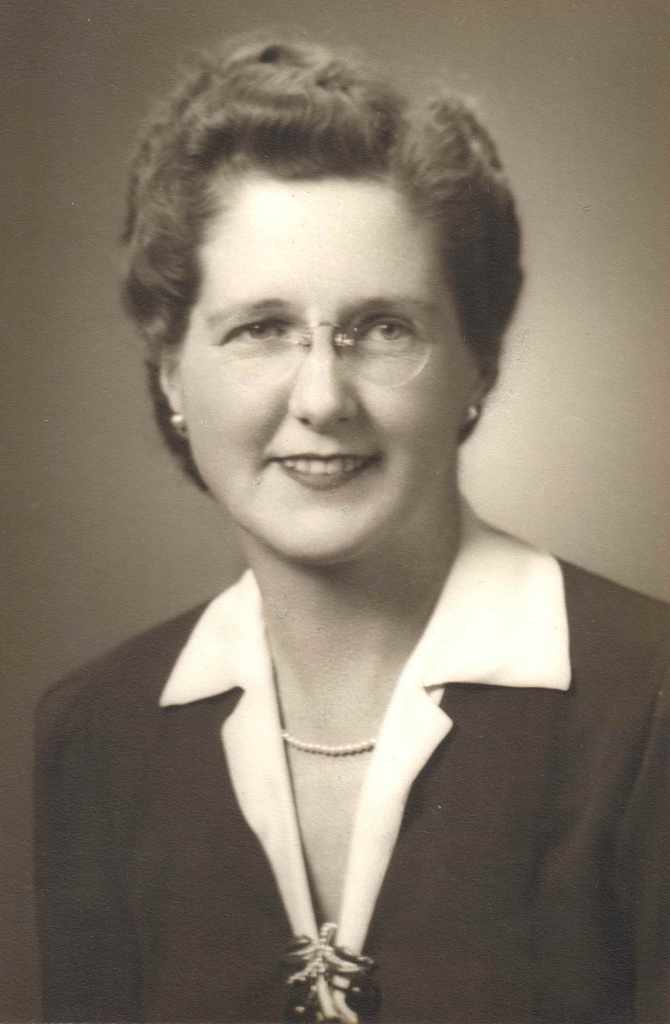
Born in 1904 in Quebec’s Eastern Townships, Mary Laura Chalk’s early life was marked by intellectual promise. She entered McGill University in 1921—initially studying in the arts—but soon transferred to physics, drawn by its unfolding mysteries. She quickly rose through the ranks, graduating with honors in 1925 and earning the Anne Molson Gold Medal for her excellence in mathematics and physics.
She went on to pursue graduate studies at McGill, where she became the first woman to earn a Ph.D. in physics from the university in 1928. Her achievement wasn’t just a personal milestone—it was a pioneering moment for Canadian science, coming at a time when women were almost entirely absent from the physical sciences.
While Schrödinger was in Europe crafting his famous equation in 1926, Mary Laura Chalk was deep in experimental physics at McGill, working under physicist John Stuart Foster. She chose to investigate the Stark effect—the splitting of spectral lines of hydrogen atoms when exposed to an electric field.
This was no simple classroom exercise. It was cutting-edge work. Using a Lo Surdo tube, she meticulously measured the relative intensities of the split spectral lines, aiming to test theoretical predictions that had only recently emerged from the radical new world of quantum theory.
Her results were stunning. They provided the first experimental confirmation of Schrödinger’s wave mechanics applied to atomic physics. At a time when the theoretical and experimental worlds were struggling to speak the same language, Chalk Rowles’ work built a bridge—showing that Schrödinger’s model didn’t just work on paper; it matched the physical world.
In 1929–30, Mary Laura Chalk spent a year at King’s College London, working under Nobel Prize-winning physicist Owen Willans Richardson, who praised her insight and even presented her research to the Royal Society—though she, as a woman, was ineligible for membership.
Mary Laura Chalk Rowles lived until 1996, reaching the age of 92. Near the end of her life, her contributions finally began to be acknowledged. In 1995, McGill University named Rowles House on its Macdonald Campus in her honor. She also established the Chalk Rowles Fellowship, supporting graduate students in physics.
Her story is one of a brilliant physicist who experimentally verified a foundational pillar of quantum mechanics, only to be quietly removed from the stage of history. Yet her work endures—and in today’s re-examination of science’s overlooked pioneers, her legacy is finally rising to meet the recognition it deserves.
Become a SheQuantum registered user now to access our exclusive educational resources in Quantum Computing from global experts.
For user registration REGISTER here, for FREE.
SheQuantum | eLearning | Twitter | LinkedIn | YouTube
© 2025 – SheQuantum
 SheQuantum