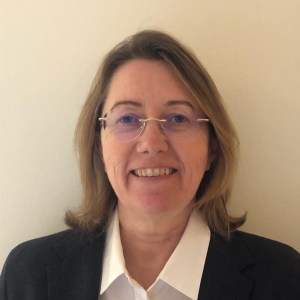
Exclusive interview with Dr Lydia Baril, Head of Quantum, National Centre for Nano Fabrication and Characterization (Nanolab), at the Technical University of Denmark (DTU) by Nithyasri Srivathsan, Founder, SheQuantum.
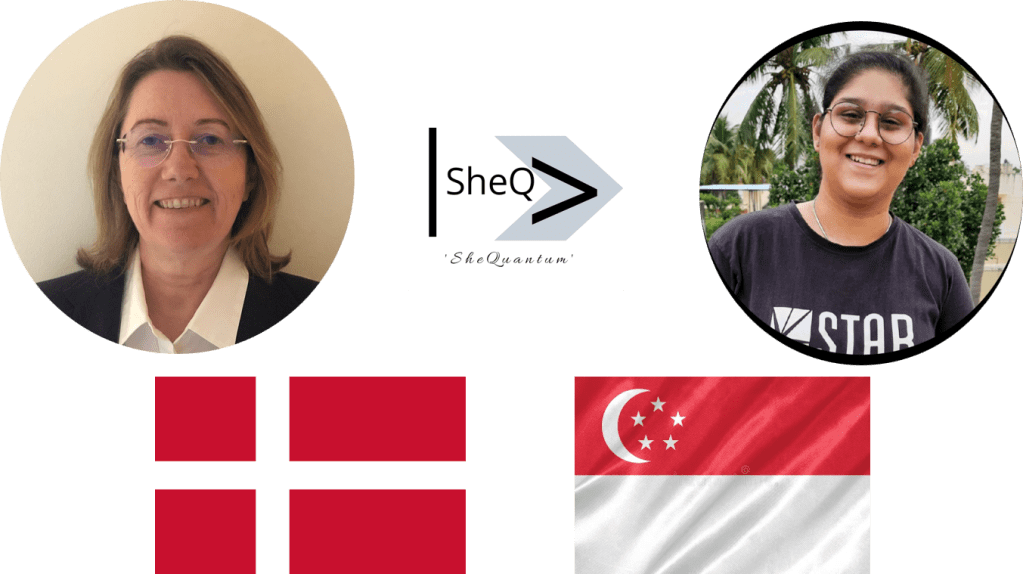
Q: Could you give an overview of the current research in quantum computing and quantum technologies at DTU?
A: At DTU, we engage in extensive research in quantum technologies, including quantum computing, with a particular focus on quantum photonics. We conduct world-class research in quantum communications and the development of photonic quantum computers, covering everything from advanced components to the construction of complete systems.
Our quantum computing initiatives extend into areas such as chemistry, biochemistry, wind grid optimization, and cybersecurity. Additionally, the DTU Nanolab features a state-of-the-art clean room that accommodates all Technology Readiness Levels (TRLs). You can visit our website at quantum.dtu.dk for more information and to view a detailed map.
Q: As a solid state physicist by training, how does your experience shape your perspectives and hopes for the future of quantum computing?
A: Early in my career, I was employed at IBM Research in Silicon Valley, where I contributed to a team responsible for transitioning a novel technology (Giant Magneto Resistance) from “the lab to the fab”. Despite numerous challenges, it became clear to me that dedicated effort can lead to substantial progress, even when obstacles appear insurmountable.
“As for quantum technologies, while the challenges may seem even greater, the advancements are impressive. Although we haven’t fully realized our goals yet, I am confident that we will encounter groundbreaking innovations in the near future.”
As for quantum technologies, while the challenges may seem even greater, the advancements are impressive. Although we haven’t fully realized our goals yet, I am confident that we will encounter groundbreaking innovations in the near future.
Q: What are your thoughts on the interdisciplinary nature of quantum computing? How important is it to develop core expertise in one subject vs being multifaceted in the context of quantum computing?
One can become an expert in quantum computing from diverse educational backgrounds.
“One can become an expert in quantum computing from diverse educational backgrounds.”
In Denmark, for instance, we have launched a new master’s program in quantum information science, a collaboration between DTU and the University of Copenhagen. This program attracts students from various fields such as computer science, physics, and chemistry.
Q: What motivated your pursuit and journey into quantum computing and quantum technologies?
A: Quantum technology is undoubtedly the most captivating field I have come across. Despite their elusive nature, we have managed to control quantum states to some degree, paving the way to amazing technology . Quantum computing introduces an additional layer of mystery with its algorithms that require a new way of thinking.
Q: How does it feel to be a woman leader in the present quantum technologies space?
A: Growing up surrounded by male family members such as brothers, cousins, and uncles, I generally feel comfortable around men, and most of the researchers I interact with are quite pleasant. We share a common passion for science. However, there are occasions when I sense that being a woman influences situations in a way that is not always positive—sometimes subtly, other times more overtly.
“However, there are occasions when I sense that being a woman influences situations in a way that is not always positive—sometimes subtly, other times more overtly.”
Other women and those in similar minority groups can truly understand this experience.
I’ve served as a mentor to younger women, trying to boost their confidence or help them with resumes or negotiation skills. But I have done that for younger men too!
Q: As a leading quantum expert, you’ve worked in dynamic environments of academia, industry, and startup. What pathway do you recommend for young women aspiring to break into the field of quantum computing?
A: Currently, every career path holds potential. Pursuing your personal interests and what truly motivates you is the way to go. This approach is particularly effective in fields like quantum technologies, where skilled talent is in short supply.
Q: Do we have enough women in quantum computing?
A: The first step is to evaluate if there is enough talent in this field, and clearly, the answer is no. Hence, there’s a definite need for more women, among others. Diversity is crucial. On a personal note, I have chosen not to pursue job opportunities where there is an evident lack of diversity in the workplace.
“Diversity is crucial. On a personal note, I have chosen not to pursue job opportunities where there is an evident lack of diversity in the workplace.”
Q: What do you think are some steps that can be taken to encourage and retain women participation in this emerging field of quantum computing to make it more inclusive?
A: Being the only woman in a group can be intimidating. This leads to a positive feedback loop. The more women present in your group, the more it attracts other women. To address this, organization can start by assessing their current situation and dedicating resources to improve it.
“Participating in events like those organized regularly by WIQD (Women in Quantum Development) or engaging with specialized eLearning platforms like SheQuantum which serves as a source of inspiration and education for women and girls in this field which can enhance understanding of the issues better”
Progress can be tracked using key performance indicators (KPIs). Participating in events like those organized regularly by WIQD (Women in Quantum Development) or engaging with specialized eLearning platforms like SheQuantum can enhance understanding of the issues and aid in recruitment efforts. Hiring consultant specialized in the issue can also help.
Q: What advice would you give to women embarking on a career in quantum computing?
A: It is a lot of fun. Concentrate on that but keep an eye on your career. Find mentors.
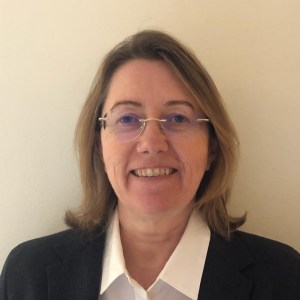
About Dr Lydia Baril: Dr Lydia Baril, Head of Quantum, National Centre for Nano Fabrication and Characterization (Nanolab), at the Technical University of Denmark (DTU), aims to strengthen cross-departmental synergies, collaborate with private enterprises, institutions, other stakeholders and contribute to build a strong Danish quantum ecosystem. Lydia drives bottom-line impact and in creating strategic roadmaps. Highly motivated by her achievements in both large corporations like Microsoft, IBM, OQC and startup environments in the quantum technologies space and she has notable experience in seamlessly heading the quantum hardware development life cycle. Lydia is a solid-state physicist and with her ever-growing experience in research and technology, she is well-versed in instituting ground-breaking strategies and in establishing data-driven models. She is a master problem solver who spent most of her time overcoming complex challenges and turning around underperforming programs. With her 28 international publications and 7 patents, she is known for her research in the field of solid-state physics and quantum. Lydia is an innovator, author, researcher, entrepreneur and devised the first 4 Qubits chip by directing a highly competent team, with her technology passion and innovation.

About Nithyasri Srivathsan: Nithyasri Srivathsan, Founder of SheQuantum, quantum researcher, author, international keynote speaker, guest lecturer, based in Singapore. She has delivered several talks and keynote speeches in France, Spain, Singapore, Netherlands, United States, and India on quantum computing education and diversity & inclusion in quantum computing. She was an invited guest lecturer at University of Massachusetts Boston where she delivered the Women’s Day Guest Lecture titled “Perspectives in Quantum Computing” in the PHYS447 Quantum Information course. Her research work on quantum information was published with the QBism Research Group, UMass Boston on the probability distributions and entanglement properties, with partial grant from NSF. Nithyasri authored the bestseller “Quantum Computing: An [Unconventional Beginners’] Book” in 2020 which was honored by BookAuthority twice as “Best Quantum Computing Books for Beginners” and “All Time Best Quantum Computing Books”, recognized internationally. Nithyasri was invited to contribute to Ernst and Young London’s white paper titled “Ready your Quantum Workforce” where she wrote about the importance of diversity in the field of quantum computing. She was invited to deliver a seminar at BII, A*STAR Singapore on Quantum Computing to their biologists recently and was featured by SCS, IMDA – Gov. of Singapore as “Singapore 100 Women in Tech” for the year 2023.
SheQuantum, the world’s first quantum computing eLearning platform inspiring and educating women and girls across the world in quantum technologies, founded in 2020 and “We’re proud of our numbers – we have a large quantum community of registered users from 70+ countries, 300+ institutions, 30+ companies and research labs with 54.39% women registered users“.
Follow and Share: to get the best of quantum computing courses, industry & academic updates, expert interviews, lecture series and educational resources in quantum computing!
Become a SheQuantum registered user now to access our exclusive educational resources in Quantum Computing from global experts.
For user registration REGISTER here, for FREE.
SheQuantum | Twitter | LinkedIn | Mascot SheQubit | YouTube
© 2024 – SheQuantum
 SheQuantum