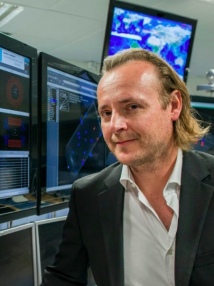
Exclusive interview with Professor Oliver Buchmueller, Imperial College London, Department of Physics & Senior Researcher at CERN by Nithyasri Srivathsan, Founder, SheQuantum.
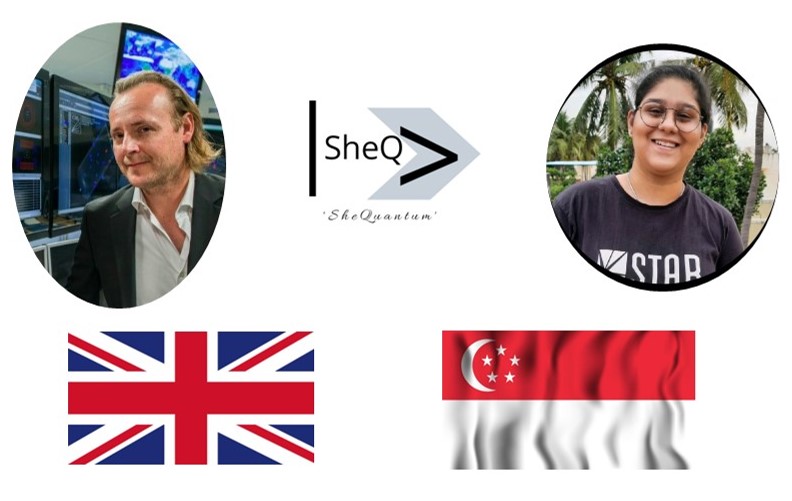
Question from Nithyasri Srivathsan, Founder, SheQuantum: Could you outline the key research activities within the Quantum Technology Development Programme for Quantum Sensor Technology at Imperial College London under your leadership and its impact on quantum technologies?

Answer from Professor Oliver Buchmueller: At Imperial College London, our Quantum Technology Development Programme is at the forefront of advancing Quantum Sensor Technology. Our team is dedicated to pushing the boundaries of what’s possible with quantum sensors, focusing on both ground and space-based applications. This includes especially innovative work on the novel AION project in dark matter detection, gravitational wave observation, and searching for processes beyond the standard model of Particle Physics. The influence of our work extends beyond academic research; we’re setting new benchmarks for quantum technologies, potentially revolutionizing fields such as navigation, telecommunications, and beyond.
Question from Nithyasri Srivathsan, Founder, SheQuantum: What sparked your interest in Quantum Sensor Technologies?
Answer from Professor Oliver Buchmueller: My interest in Quantum Sensor Technologies was ignited by the potential for profound discoveries in fundamental physics and the vast array of real-world applications. The ability of quantum sensors to measure physical quantities with unprecedented precision opens doors to exploring the universe in ways we’ve only begun to imagine, from searching for dark matter, detection gravitational waves to monitoring climate change. This intersection of theoretical physics and practical application is where my passion lies.
Question from Nithyasri Srivathsan, Founder, SheQuantum: Despite Quantum Sensing having significant short-term impacts on technology, it seems less popular than Quantum Computing. What are your thoughts?
Answer from Professor Oliver Buchmueller: Quantum Sensing and Quantum Computing are both pivotal to the quantum revolution. However, Quantum Sensing is indeed less in the public eye, despite its immediate applications and impact. This may be due to the abstract nature of sensing technologies and their outcomes, which can be less tangible to the general public compared to the computational prowess and potential of quantum computers. Nonetheless, Quantum Sensing is making strides in various industries, from healthcare to navigation, and its contributions should not be underestimated. In fact, as in our case, the technology development for cold atom interferometry could very well turn into a very promising novel platform for quantum computing.
“Nonetheless, Quantum Sensing is making strides in various industries, from healthcare to navigation, and its contributions should not be underestimated”
Question from Nithyasri Srivathsan, Founder, SheQuantum: How important is interdisciplinary research for young quantum researchers?
Answer from Professor Oliver Buchmueller: Interdisciplinary research is crucial. The challenges and opportunities in quantum technologies require a broad perspective, integrating knowledge from physics, geology, cosmology, and beyond. For young researchers, exploring these intersections not only broadens their understanding but also opens up innovative pathways for discovery and application. The future of quantum research will be shaped by those who can navigate and connect diverse disciplines, I think.
“The future of quantum research will be shaped by those who can navigate and connect diverse disciplines, I think.”
Question from Nithyasri Srivathsan, Founder, SheQuantum: Can you explain the principle behind cold atoms in sensing technologies and its applications?
Answer from Professor Oliver Buchmueller: Cold atoms serve as exceptionally precise sensors due to their sensitivity to gravitational, magnetic, and electric fields.

By cooling atoms to near absolute zero, we can observe their quantum properties with minimal interference from thermal motion. This allows for unprecedented accuracy in measurements, crucial for applications ranging from gravitational wave detection to navigation systems. Our research in this area not only advances fundamental physics but also lays the groundwork for next-generation technologies.
Question from Nithyasri Srivathsan, Founder, SheQuantum: Please tell us about AION and its contributions towards Quantum Sensing and Computing?
Answer from Professor Oliver Buchmueller: AION, my main project at Imperial College London, exemplifies the cutting-edge of Quantum Sensing. It leverages cold atom technologies for fundamental physics research and practical applications. Through AION, we aim to create a network that enhances gravitational wave detection, contributing to our understanding of the universe. Its interdisciplinary nature and collaboration across institutions highlight its potential to significantly impact both Quantum Sensing and Computing.
Question from Nithyasri Srivathsan, Founder, SheQuantum: Reflecting on your two decades with the CMS Collaboration at CERN, how do you view its impact on fundamental science and its prospective role in quantum technology development?
Answer from Professor Oliver Buchmueller: My 20-year-long journey with the CMS Collaboration at CERN has been deeply rewarding, highlighting CERN’s significant contributions to fundamental science. This institution’s dedication to exploring the unknown has led to monumental discoveries, such as the Higgs boson, underscoring its leadership in accelerator and particle physics. CERN’s commitment to open research and collaboration has established it as a cornerstone of scientific innovation and progress.
In addition to its world-leading role in collider-based science, which is expected to continue shaping our understanding of the universe for decades to come, I foresee CERN also becoming an influential force in the realm of quantum technology (QT). The complex challenges of today’s fundamental physics increasingly call for advancements in QT, including enhanced sensors and quantum computing. CERN’s robust infrastructure, vast expertise, and culture of collaboration make it well-suited to contribute significantly to this field. In my opinion, this expansion into QT development does not divert from CERN’s primary focus on particle physics but rather complements it, offering new tools and methodologies to probe the intricacies of the universe. It positions CERN not only as a leader in uncovering the particles and forces that shape our world but also as a pioneering institution where the frontiers of quantum technologies are expanded, further enriching the scientific community’s capabilities to tackle unresolved questions. I am immensely grateful to be part of this dynamic and forward-looking community, contributing to its legacy of discovery and innovation.
Question from Nithyasri Srivathsan, Founder, SheQuantum: Do we have enough women in the field of quantum technologies?
Answer from Professor Oliver Buchmueller: The field of quantum technologies, like many STEM fields, has room for much improvement in gender diversity.
“The field of quantum technologies, like many STEM fields, has room for much improvement in gender diversity”
While strides have been made, more efforts are needed to encourage and support women in quantum research and industry. Diversity fuels innovation, and it’s imperative that we create an inclusive environment where everyone has the opportunity to contribute.
Question from Nithyasri Srivathsan, Founder, SheQuantum: How can one start a career in research, especially women?
Answer from Professor Oliver Buchmueller: Starting a career in research demands curiosity, perseverance, and a strong support network. This is particularly true for women, who face unique challenges in STEM fields. Finding mentors and peers who can relate to these challenges is crucial. Engaging with communities, attending conferences, and seeking collaboration opportunities are essential steps to building a robust knowledge foundation and supportive relationships.
“On a personal note, as someone who strongly encourages my daughter, who is currently studying physics, to pursue her interests in this field, I believe that fostering a passion for science from a young age and supporting it through education and beyond is key”
On a personal note, as someone who strongly encourages my daughter, who is currently studying physics, to pursue her interests in this field, I believe that fostering a passion for science from a young age and supporting it through education and beyond is key. It’s about creating an environment where young women feel empowered to ask questions, seek answers, and contribute their perspective to the advancement of science and technology.
Question from Nithyasri Srivathsan, Founder, SheQuantum: What’s your advice for young women entering quantum technologies and physics?
Answer from Professor Oliver Buchmueller: My advice is to remain curious and resilient. The path to advancing in quantum technologies and physics is challenging but incredibly rewarding. Seek out mentors, join supportive networks, and don’t be afraid to ask questions. Remember, your perspective is valuable, and your contributions can lead to breakthroughs that shape the future of technology and science. SheQuantum is playing a crucial role in empowering women in quantum sciences and technologies, providing a platform for education, networking, and collaboration.
“My advice is to remain curious and resilient. The path to advancing in quantum technologies and physics is challenging but incredibly rewarding”
To the SheQuantum community, I say: your work is essential in building a diverse and innovative future for quantum technologies. Keep pushing boundaries, supporting each other, and striving for excellence. Together, we can achieve remarkable things.
“To the SheQuantum community, I say: your work is essential in building a diverse and innovative future for quantum technologies. Keep pushing boundaries, supporting each other, and striving for excellence. Together, we can achieve remarkable things”
About Professor Oliver Buchmueller: Buchmueller is a full Professor of Physics at Imperial College London and visiting professor at University of Oxford, a senior member of the CMS Collaboration, and the leading Principal Investigator (PI) of the Atom Interferometer Observatory and Network (AION) consortium as well as the lead author of the Atomic Experiment for Dark Matter and Gravity Exploration in Space (AEDGE) mission. This novel combination of quantum technologies has the potential for ground-breaking discovery at the very heart of fundamental physics, as well as commercial applications in quantum technology. He also spearheads the international community building process for Cold Atoms in Space, which brings together representatives of the cold atom, astrophysics, cosmology, fundamental physics, geodesy and earth observation communities. Buchmueller’s research focuses on intriguing challenges in modern fundamental physics, such as dark matter, gravitational wave detection, and processes beyond the standard model. Additionally, he leads a quantum technology development program for Quantum Sensor Technology, covering applications in both ground and space-based settings. Buchmueller is a senior member of the CMS Collaboration at CERN, which comprises approximately 3000 international members and is one of the largest collaborations in fundamental science.
About Nithyasri Srivathsan: Nithyasri Srivathsan, Founder of SheQuantum, quantum researcher, author, international keynote speaker, guest lecturer, based in Singapore. She has delivered several talks and keynote speeches in France, Spain, Singapore, Netherlands, United States, and India on quantum computing education and diversity & inclusion in quantum computing. She was an invited guest lecturer at University of Massachusetts Boston where she delivered the Women’s Day Guest Lecture titled “Perspectives in Quantum Computing” in the PHYS447 Quantum Information course. Her research work on quantum information was published with the QBism Research Group, UMass Boston on the probability distributions and entanglement properties, with partial grant from NSF. Nithyasri authored the bestseller “Quantum Computing: An [Unconventional Beginners’] Book” in 2020 which was honored by BookAuthority twice as “Best Quantum Computing Books for Beginners” and “All Time Best Quantum Computing Books”, recognized internationally. Nithyasri was invited to contribute to Ernst and Young London’s white paper titled “Ready your Quantum Workforce” where she wrote about the importance of diversity in the field of quantum computing. She was invited to deliver a seminar at BII, A*STAR Singapore on Quantum Computing to their biologists recently and was featured by SCS, IMDA – Gov. of Singapore as “Singapore 100 Women in Tech” for the year 2023.
SheQuantum, the world’s first quantum computing eLearning platform inspiring and educating women and girls across the world in quantum technologies, founded in 2020 and “We’re proud of our numbers – we have a large quantum community of registered users from 70+ countries, 300+ institutions, 30+ companies and research labs with 54.39% women registered users“.
Follow and Share – to get the best of quantum computing courses, industry & academic updates, expert interviews, lecture series and educational resources in quantum computing!
Become a SheQuantum registered user now to access our exclusive educational resources in Quantum Computing from global experts.
For user registration REGISTER here, for FREE.
SheQuantum | Twitter | LinkedIn | Mascot SheQubit | YouTube
© 2024 – SheQuantum
 SheQuantum